


Ask any experienced drone operator in India what part fails most often in the middle of a spraying season, and a surprising number will point to the same small board hidden inside the arm: the ESC. Motors get the glory, batteries get the attention, but the ESC for agriculture drones is the component that quietly decides whether your motors spin smoothly or your drone drops out of the sky mid-flight.
An undersized, counterfeit, or poorly matched ESC is one of the most common causes of grounded drones, burnt motors, and lost spraying revenue. Yet it is also the part buyers understand the least. This guide fixes that — covering exactly how to choose the right ESC for a heavy-lift agriculture drone in India, how current and voltage ratings work, why agri ESCs differ from FPV ones, what makes them burn out, and how much they cost in 2026.
What Is an ESC and Why It's the Most Overlooked Agriculture Drone Component
ESC stands for Electronic Speed Controller. Its job sounds simple but is critical: it takes the direct current (DC) from your battery and the throttle commands from your flight controller, and converts them into the precisely timed three-phase power that spins your brushless motor. Every change in motor speed — every hover correction, every turn at the edge of a field — passes through the ESC first.
Because it sits invisibly between the battery and the motor, the ESC rarely gets credit when a drone flies well. But when it fails, everything downstream fails with it. A motor cannot run without a working ESC, so a single burnt speed controller can ground an entire spraying operation.
How an ESC powers your brushless motor
Brushless motors do not run on plain DC. They need power delivered to their coils in a rapid, carefully sequenced pattern — a process called commutation. The ESC handles this by switching current through the motor’s phases hundreds of times per second using components called MOSFETs. The faster and cleaner that switching, the smoother and cooler your motor runs. This is why a quality ESC directly affects flight stability, motor temperature, and overall efficiency.
Why heavy-lift agriculture ESCs are different from FPV ESCs
Most ESC information online is written for FPV racing drones — tiny, lightweight quads drawing modest current. Agriculture spraying drones are the opposite. They lift heavy liquid payloads of 10, 16, 20 litres or more, run large motors on high-voltage battery packs, and hover under sustained heavy load for long stretches.
That means an agriculture ESC must handle far higher continuous current, tolerate more heat, and often runs on smoother sine-wave control rather than the sharp switching used in racing. Applying FPV logic to an agri drone build is a classic and expensive mistake. When you search for the best ESC for a high-payload drone, you are looking at a genuinely different class of component — one built for endurance, not acrobatics.
ESC Current Rating Explained — Continuous vs Burst
The single most important number on any ESC is its current rating, measured in amps (A). Get this wrong and no other spec matters, because the ESC will overheat and fail. This is where a proper drone ESC current rating guide earns its place.
Every ESC lists two figures. The continuous rating is the current it can safely handle for long, sustained periods — this is the number that matters most for spraying drones that hover under load. The burst rating is a much higher figure the ESC can tolerate only for a few seconds, typically during sharp throttle spikes. As a rule of thumb, continuous current is usually only around 60–70% of the burst figure, so never size your ESC based on the burst number alone.
The 20–30% safety-margin rule that prevents burnouts
Here is the rule that prevents most ESC failures: your ESC’s continuous rating should exceed your motor’s maximum current draw by at least 20–30%. If your motor can pull 60A at full load, you want an ESC rated for roughly 75–80A continuous or more. That headroom absorbs the demand spikes that happen during heavy payload lifts, gusty crosswinds, and aggressive climbs — exactly the conditions Indian spraying drones face daily. Running an ESC at its absolute limit is the fastest way to cook it.
Matching ESC amps to your motor's max current draw
Always start from your motor’s specification sheet, not guesswork. Find the motor’s maximum current draw at your chosen voltage and propeller, then add your safety margin. For heavy-lift agriculture motors carrying 10–20 litre tanks, continuous ratings in the range of roughly 80–120A per motor are common, with burst ratings even higher. If you are still selecting motors, our guide on the CW brushless drone motor for high-payload agriculture drones helps you read those numbers correctly before you buy the matching ESC.
Voltage & Compatibility — Matching ESC to Motor, Battery & Flight Controller
Current is only half the story. An ESC also has to match the voltage of your battery pack and communicate correctly with your flight controller. A mismatch here can destroy components the moment you plug in.
12S vs 18S — choosing the right voltage class
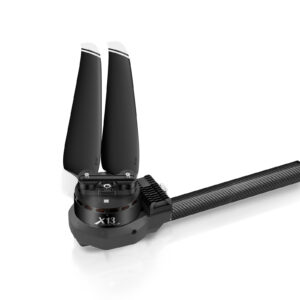
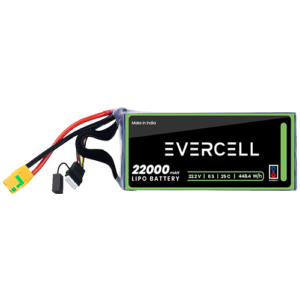
Agriculture drones run on high-voltage LiPo packs, and your ESC must be rated for that voltage. Mid-size spray drones commonly use 12S packs, while larger, high-thrust systems — like setups built around the Hobbywing X13, which runs on 18S — demand ESCs rated for that higher voltage. Plugging an 18S pack into a 12S-rated ESC will instantly damage it. Confirm your battery’s cell count and match the ESC’s supported voltage range exactly. Our LiPo battery guide for agriculture drones explains how cell count translates to voltage so you can cross-check compatibility.
ESC–motor–propeller matching for payload (10L, 16L, 20L+)
Your ESC does not work in isolation — it is one link in a power chain of motor, propeller, and battery, all sized to your target payload. A larger tank means more all-up weight, which means larger propellers, higher-thrust motors, and therefore higher current, which finally dictates a higher-rated ESC. Get any link wrong and the whole chain suffers: an oversized prop on an undersized ESC is a guaranteed burnout. Choosing the right propeller is a big part of this balance, which we cover in our drone propeller solutions guide.
Flight controller signal & protocol compatibility
Finally, the ESC has to speak the same language as your flight controller. The controller sends throttle commands using a specific signal protocol, and the ESC must understand it. Many modern agriculture power systems also send data back to the flight controller — motor RPM, temperature, and current — which helps with monitoring and safety. Before buying, confirm the ESC is compatible with your flight controller’s outputs. If you are choosing a controller at the same time, our guide on how to select the best flight controller for agriculture drones pairs directly with this step, and our walkthrough on pairing your flight controller with agriculture drone components shows how it all connects.
Integrated vs Individual ESCs — And Where Hobbywing Fits
There are two broad ways to power an agriculture drone’s motors: individual ESCs wired to each motor, or an integrated power system where the ESC and motor come matched together as a unit.
Hobbywing intelligent power systems (X8, X9, X11, X13)
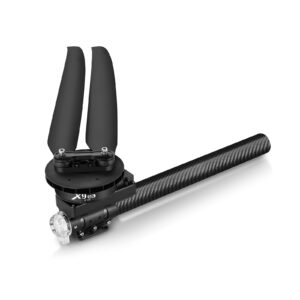
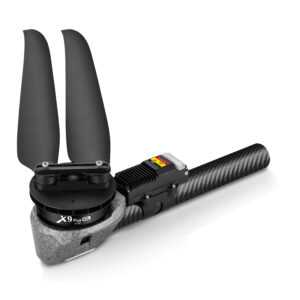
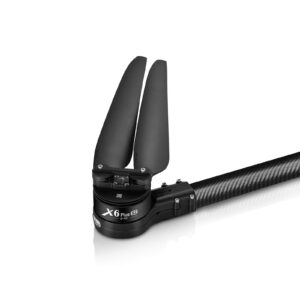
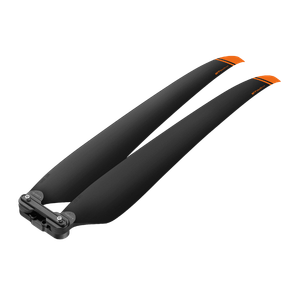
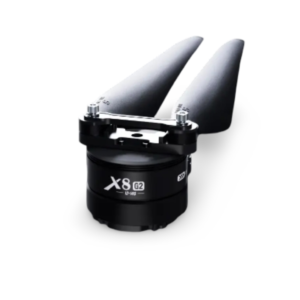
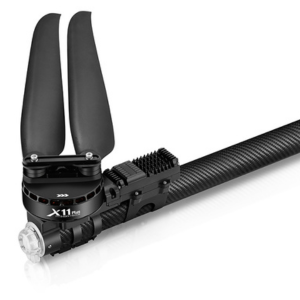
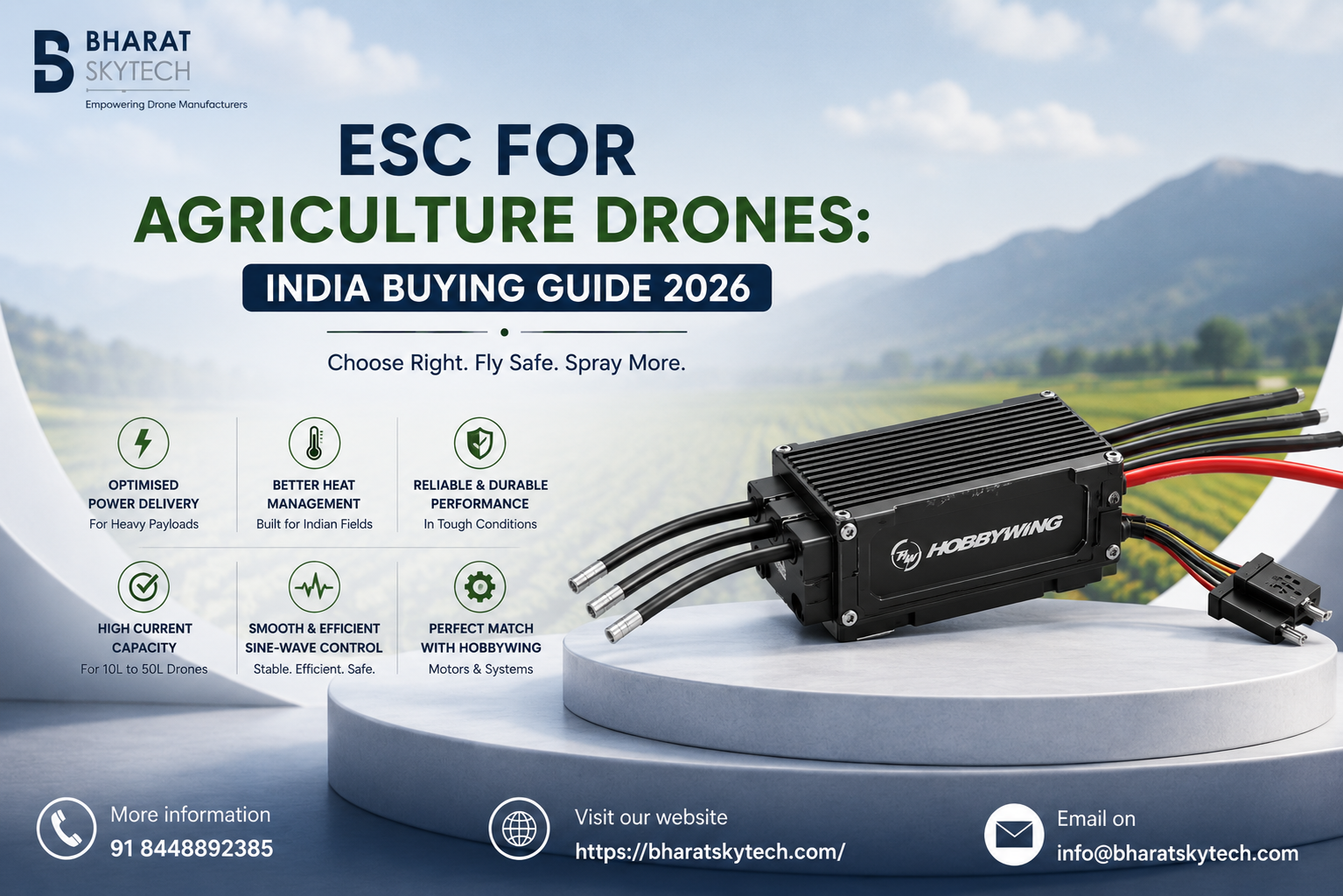
For most serious agriculture builds in India, integrated systems dominate — and Hobbywing’s X-series is the reference standard. The Hobbywing ESC for agriculture drones comes matched to its motor and propeller as a complete power unit (the X8, X9, X11, and X13 families), so the amp rating, voltage, and firmware are already tuned to work together. This removes most of the guesswork around mismatching, which is exactly why these combos are so popular for professional spraying rigs. You can see how these systems are put together in our Hobbywing X6, X8, X9 and X11 combo guide and the dedicated Hobbywing X13 with 5620 propeller combo guide.
Sine-wave/FOC ESCs vs BLHeli — why agri drones prefer smooth commutation
You will hear a lot about BLHeli firmware in the FPV world. Agriculture drones usually go a different route. High-end agri ESCs, including Hobbywing’s intelligent systems, typically use sine-wave or FOC (Field-Oriented Control) commutation rather than the sharp switching used in racing ESCs. Sine-wave control produces smoother, quieter rotation with less heat and vibration under sustained heavy load — precisely what a spraying drone needs when it is hovering with a full tank for minutes at a time. For heavy-lift work, that thermal efficiency matters far more than the ultra-fast throttle response FPV pilots chase.
Why Agriculture Drone ESCs Burn Out (And How to Prevent It)
ESC failure is rarely random. It almost always traces back to heat, and heat traces back to a handful of preventable causes. Understanding them protects your investment and your flight time.
Over-propping, overheating & thermal runaway
The most common killer is over-propping — fitting a propeller larger or more aggressive than the ESC can support. The bigger prop pulls more current than the ESC is rated for, temperatures climb rapidly, and the ESC either triggers thermal protection (cutting motor power mid-flight, which can cause a crash) or burns out its MOSFETs entirely. This is why correct ESC-motor-propeller matching, and that 20–30% safety margin, are not optional.
Dust, moisture & chemical exposure in Indian field conditions
Indian agriculture is brutal on electronics. Dusty fields, high humidity during the kharif season, intense heat, and the constant presence of pesticide and fertilizer spray all attack an ESC over time. Moisture and chemical residue can corrode solder pads and short out phases, while dust buildup traps heat. Choosing ESCs with rugged, well-protected construction — and cleaning your drone after every spraying session — dramatically extends their life. This kind of durability thinking runs through our drone components quality checklist for new buyers.
Warning signs — burning smell, excess heat, desync, motor stutter
Your ESC usually warns you before it dies completely. Learn to spot the signs: a burning or acrid smell, an ESC that is too hot to comfortably touch after landing, motors stuttering or briefly cutting out (a symptom called desync), inconsistent throttle response, or visible scorch marks on the board. Any of these means you should stop flying immediately and inspect the power system. Flying on a failing ESC risks a full motor failure and a crash landing that damages far more than one board.
ESC Price in India (2026) & What Affects Cost
Naturally, buyers want to know the agriculture drone ESC price in India. Cost varies widely based on current rating, voltage class, build quality, and whether you buy the ESC alone or as part of an integrated motor combo.
Standalone ESC vs integrated motor-combo pricing
A standalone ESC for a smaller drone is relatively inexpensive, but high-current agriculture-grade units cost more because of their heavier MOSFETs, better heat management, and higher voltage tolerance. Integrated Hobbywing X-series power systems are priced as complete motor-plus-ESC-plus-propeller units, so their cost reflects the whole matched package rather than the ESC alone — which is also why they are more reliable, since nothing is mismatched. (Prices shift with brand, import duties, and supply, so always confirm the current figure before ordering.)
Why genuine ESCs are worth the premium
It is tempting to save money on a cheaper or unbranded ESC, but this is exactly where counterfeits cause the most damage. A fake or off-spec ESC that fails under load can take your motor — and sometimes your flight controller — down with it, turning a small saving into a large repair bill and days of lost spraying income. Buying a genuine, correctly-rated ESC from a trusted supplier is not an expense; it is insurance for your entire drone.
How to Choose the Right ESC — Buyer's Checklist
Before you buy, run through this quick pre-purchase checklist:
- Current rating: Continuous amp rating is at least 20–30% above your motor’s maximum current draw.
- Voltage class: ESC voltage range matches your battery’s cell count (e.g., 12S or 18S).
- Motor & prop match: ESC, motor, and propeller are sized together for your target payload.
- Flight controller compatibility: ESC supports your controller’s signal protocol.
- Cooling: ESC is mounted where propeller airflow can reach it, not buried and heat-trapped.
- Build quality: Rugged, field-grade construction suited to dust, heat, and chemical exposure.
- Authenticity: Genuine product from a trusted supplier, ideally with warranty and support.
Tick every box, and you eliminate almost every common cause of ESC failure before it happens.
Buy Genuine Agriculture Drone ESCs from Bharat Skytech
An ESC is only as good as its match to the rest of your power system — and only as reliable as its authenticity. That is why sourcing from a specialist matters. At Bharat Skytech, we supply genuine, performance-tested ESCs and complete Hobbywing power systems built for Indian agriculture drones and field conditions, backed by sales support that helps you match the ESC correctly to your motor, battery, and flight controller the first time.
Whether you are building a new 16L spraying drone, upgrading to higher payload, or replacing a burnt ESC to get back to the field fast, browse our drone electricals and ESC range and agriculture drone motors to build a power system that lasts.
Frequently Asked Questions (FAQs)
Can any ESC work with any brushless motor?
Electrically, most brushless ESCs will drive most brushless motors of the same voltage range — but “will spin” is not the same as “is safe.” The ESC’s continuous current rating must comfortably exceed your motor’s maximum draw, and the voltage class must match your battery. For agriculture drones, always match the full motor-ESC-propeller set.
How many amps does an ESC for a 16L spraying drone need?
It depends on your specific motors, but heavy-lift agriculture setups commonly run ESCs rated around 80–120A continuous per motor, with higher burst ratings. Confirm your motor’s max current draw and add a 20–30% margin.
Do I need an ESC with a BEC?
A BEC (Battery Elimination Circuit) powers accessories like a receiver or flight controller from the ESC. Many agriculture drones use a separate power module for the flight controller, so a BEC is often unnecessary — but check your specific build’s power setup before deciding.
Why does my drone ESC keep overheating?
The usual cause is over-propping or an undersized ESC pulling more current than it is rated for. Check that your propeller matches your motor and ESC, ensure the ESC gets airflow, and verify its continuous rating has proper headroom over your motor’s draw.