


Almost every operator obsesses over motors, ESCs, and batteries. Almost nobody thinks about the wires connecting them — until the day a battery lead melts its insulation mid-flight, a connector arrives back at the workshop blackened, or a power distribution board for agriculture drones cooks itself into a dead short and takes a 20-litre spraying drone down with it.
Here is the uncomfortable truth: on a heavy-lift agriculture drone, the wiring is one of the most under-specified parts of the entire build. Builders spend weeks choosing the right motor and then run wire that could never carry the current those motors demand. The components are fine. The wiring is the weak link.
This guide covers how to size a PDB for a spraying drone, how to choose the right wire gauge, which connectors survive high current, why wires burn, and how to spot a failing power path before it fails on you.
What a PDB Does — and Why Heavy-Lift Drones Punish It
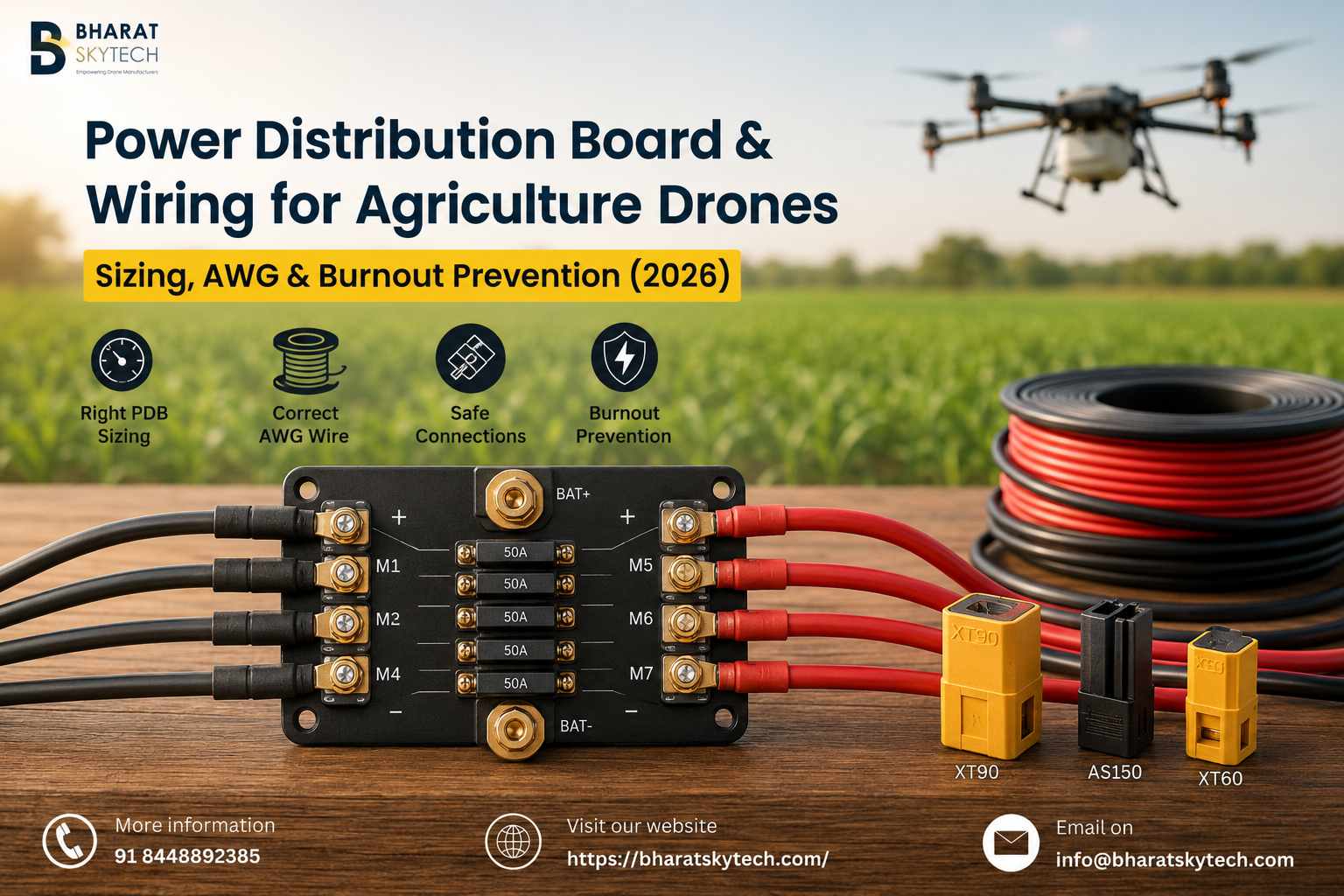
A Power Distribution Board (PDB) is exactly what its name says: a board that takes the single high-current feed from your battery and splits it cleanly to every ESC on the aircraft. Instead of a messy nest of soldered-together wires, you get one board with thick copper traces routing power to each arm. Many PDBs also provide extras — a regulated 5V or 12V output (a BEC) to power the flight controller and peripherals, a current sensor so the flight controller can monitor consumption, and capacitor filtering to smooth electrical noise.
The board itself is simple. The problem is what agriculture asks of it.
How agriculture currents differ from FPV currents
Nearly every PDB and wiring guide online is written for FPV racing drones — where a whole aircraft might peak at 100A. An agriculture spraying drone is a different animal entirely. Heavy-lift motors carrying a full spray tank can each draw substantial current continuously, not in short bursts. Multiply that across four, six, or eight motors, and total system draw can climb well past 200A in a sustained hover.
That difference matters enormously, because heat in a wire or a copper trace rises with the square of the current. Double the current and you quadruple the heat. This is why a wiring approach that works perfectly on a hobby quad becomes a fire hazard on a spraying drone, and why so much of the advice you find online is quietly dangerous when applied to agriculture. The current your system draws is set by your motors and ESCs — start there, using our ESC guide for agriculture drones, then size the wiring to carry it.
PDB vs Busbar vs Direct Wiring — Which Suits a Spraying Drone
There are three ways to distribute power on an agriculture drone.
A dedicated PDB is the classic solution: a purpose-built board with high-current ratings and clean solder pads for each ESC. It keeps the build tidy and is well suited to mid-size spraying drones.
A busbar or heavy copper distribution block is what many large heavy-lift builds use, because at very high currents (200A and beyond) a standard board’s traces become impractical. Thick copper handles the load with far less resistance and heat.
Direct wiring, where battery leads are split into a wiring harness that runs straight to each ESC, is common on large agriculture platforms and integrated power systems. It is entirely viable, but every solder joint becomes a potential failure point, so quality of assembly is everything.
For most Indian spraying drone builds, a properly-rated PDB or a well-made high-current harness is the right answer. What matters far more than which one you choose is that it is rated for your real current draw — with margin.
Sizing Your PDB — Continuous Current Is the Only Number That Matters
PDBs are advertised with a current rating, and buyers routinely misread it. Just like an ESC, a PDB may quote a burst figure that it can only survive for seconds. What keeps your drone alive is the continuous rating.
Total draw = per-motor draw × number of motors (+ margin)
Sizing is straightforward arithmetic. Take your motor’s maximum current draw at your chosen voltage and propeller (from the motor’s thrust chart, not from guesswork), multiply by the number of motors, and that is your peak system draw. Then add a safety margin of at least 20–30% on top.
If each of six motors can pull 60A at full load, your system peaks around 360A — and your distribution hardware must be rated to handle that with headroom, not to sit exactly at it. A drone PDB current rating that merely matches your calculated draw is a PDB running permanently at its limit, which is a PDB that will eventually cook. This is the same headroom principle that governs every part of your power chain, explained end-to-end in our agriculture drone power system guide.
Wire Gauge (AWG) — Why Thin Wire Is the #1 Cause of Melted Builds
If there is one section of this guide to take seriously, it is this one. Undersized wire is the single most common cause of melted, smoking, and burnt agriculture drone builds — and it is completely preventable.
How AWG works (smaller number = thicker wire)
AWG (American Wire Gauge) runs backwards, which trips up newcomers constantly: the smaller the number, the thicker the wire. So 10 AWG is much thicker — and carries far more current — than 16 AWG. Thicker wire has lower resistance, which means less heat and less voltage lost on the way to your ESCs.
AWG selection by current — battery leads vs motor leads
Two different runs carry two very different loads, and they must be gauged separately.
Your battery leads carry the entire system’s current — every motor’s draw combined. This is the highest-current path on the aircraft, and it needs the thickest wire in the build. Heavy-lift agriculture drones commonly need very thick battery leads (in the 8–10 AWG range and thicker on large, high-current platforms) precisely because they carry everything at once.
Your motor/ESC leads carry only one motor’s share, so they can be thinner — but they must still be rated comfortably above that single motor’s maximum draw. Sizing motor leads by feel, or reusing whatever wire came in the box, is how builds fail.
The rule that prevents almost every wiring disaster: size wire by measured current, with margin — and if you are unsure, go one gauge thicker. A thicker wire costs a few grams and a few rupees. A thin wire costs you a drone.
Why silicone wire, and why short leads matter
Two details separate a professional build from an amateur one.
Use silicone-insulated wire, not PVC. Silicone stays flexible, tolerates far higher temperatures without melting, and survives the vibration and heat cycling of agricultural flying. PVC insulation is a liability on a high-current drone.
Keep high-current leads as short as practical. Every extra centimetre of wire adds resistance, and resistance under high current does two things: it drops voltage (so your ESCs see less than the battery is actually supplying, costing you power and flight time) and it converts the lost energy into heat inside the wire. Long, thin battery leads are a heater strapped to your airframe.
Finally, route high-current power wires away from signal wires — the GPS, compass, and flight controller leads. Big currents create electromagnetic noise that can corrupt sensitive navigation signals, which matters even more if you are running precision positioning, as covered in our RTK module guide.
Connectors — XT60, XT90 and AS150 for High-Current Agri Drones
A connector is just a wire that can come apart — and it is subject to the same current physics. Undersized connectors overheat, and their contact resistance turns them into hot spots that melt housings and cause voltage sag under load.
XT60 connectors are common on smaller drones and moderate loads. XT90 steps up for higher current. For the very high currents of large agriculture drones, heavier connectors such as AS150 (often paired with anti-spark features) are the appropriate choice, since they are designed for these loads and reduce the arcing that occurs when connecting a large, high-voltage battery.
Two practical rules: never use a connector rated below the current it will carry, and never mix a quality connector with a cheap counterfeit — the counterfeit is where the heat will concentrate. Our existing guide on XT30 vs XT60 drone connectors covers how to match connector to load.
Current and voltage matching in one line
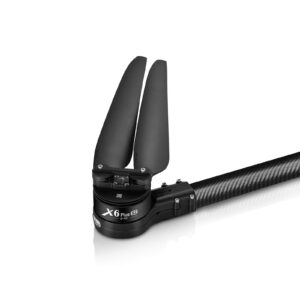
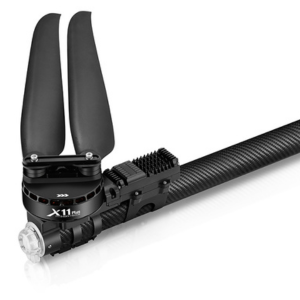
Two numbers keep an ESC alive: its continuous current rating must exceed your motor’s maximum current draw by at least 20–30%, and its voltage range must match your battery’s cell count. Ignore either and the ESC overheats and burns out, often taking the motor with it. Many agriculture builds avoid this guesswork entirely by using integrated power systems — like the Hobbywing X-series — where motor, ESC, and propeller come matched as a unit. The full detail is in our dedicated ESC for agriculture drones guide, and matched combos are covered in our Hobbywing X6, X8, X9 and X11 guide.
Soldering & Assembly — Where Most Failures Actually Begin
You can buy a perfect PDB, perfect wire, and perfect connectors — and still lose the drone to a bad solder joint.
Cold joints, vibration chafing, and strain relief
A cold solder joint looks dull and grainy rather than shiny, and it has high resistance. Under 60A, that resistance becomes a localised hot spot that eventually melts the joint apart — usually mid-flight. Soldering thick wire to a high-current pad requires a genuinely powerful iron; a small hobby iron cannot deliver enough heat and will leave you with exactly the kind of joint that fails.
Vibration is the other silent killer. Agriculture drones vibrate constantly, and an unsecured wire rubbing against a carbon-fibre frame edge will slowly chafe through its insulation. Carbon fibre conducts electricity — so a chafed power wire touching the frame is a dead short. Secure every wire, protect it wherever it passes an edge, and provide strain relief so the weight and movement of a cable is never carried by its solder joint.
Why Wires and PDBs Burn Out in the Field
Failures follow a predictable pattern. Learn to recognise these:
- Undersized wire or PDB. Current exceeds what the copper can carry; the wire heats, the insulation softens, then melts. The most common cause by far.
- Bad solder joints. High resistance at one point creates a hot spot that eventually fails, often taking the pad with it.
- Counterfeit or cheap connectors. Poor contact area and inferior metal create resistance and heat exactly where two high-current paths meet.
- Chafed insulation. Vibration wears wire against the frame until it shorts.
- Corrosion. Chemical spray, dust, and humidity attack solder joints and connector pins, gradually raising resistance until they run hot.
- Loose connectors. A connector that is not fully seated has a tiny contact area carrying full current — a guaranteed hot spot.
Warning signs to act on immediately
Your wiring warns you before it fails. Look for discoloured or browned wire insulation, connectors that are hot to touch after landing, a burnt or acrid smell, blackened or pitted connector pins, unexplained voltage sag under throttle, or any softening or deformation of a connector housing. Any of these means you stop flying and inspect the power path. Wiring failures do not stay small — they end in a short circuit, a dead battery pack, or a fire.
PDB & Wiring Price in India (2026)
Here is the good news, and the reason this failure category is so frustrating: wiring is the cheapest part of your entire drone.
A quality PDB, a length of proper silicone wire, and a set of genuine high-current connectors cost a tiny fraction of what you spent on motors, ESCs, and batteries. Yet undersized or counterfeit versions of these cheap parts are exactly what destroy those expensive components. A melted battery lead can short a ₹30,000 battery pack; a failing PDB can take several ESCs with it.
Saving a few hundred rupees on wire and connectors is the worst trade in drone building. Buy the correct gauge, buy genuine connectors, and buy a PDB rated well above your draw. (Prices vary with brand, current rating, and supply — confirm current figures before ordering.)
Pre-Flight Wiring Inspection Checklist
Run this before every flying day — it takes two minutes:
- Connectors fully seated and free of black marks, pitting, or melted plastic.
- Wire insulation intact — no browning, no chafing, no exposed copper.
- Solder joints shiny and solid — no dull, cracked, or lifted joints.
- Wires secured and not rubbing against any frame edge.
- PDB clean and undamaged — no scorch marks, no lifted pads.
- Nothing hot to touch after landing. Warm is normal; hot is a warning.
- No corrosion on pins or pads from chemical spray or moisture.
Buy Genuine Drone Electricals from Bharat Skytech
Your wiring is the nervous system of your power chain — invisible when it works, catastrophic when it doesn’t. It is also the easiest place to get it right, because the correct parts are inexpensive and readily available.
At Bharat Skytech, we supply genuine power distribution boards, high-current connectors, silicone wiring, and drone electricals built for the real currents and real field conditions of Indian agriculture drones — plus sales support to help you match your PDB, wire gauge, and connectors to your actual motor and ESC draw. Explore the drone electricals range, and cross-check your build against our components quality checklist before you fly.
Frequently Asked Questions (FAQs)
What current rating should my PDB have?
Multiply your motor’s maximum current draw by the number of motors, then add at least a 20–30% margin. Always size against the continuous rating, never the burst figure.
What wire gauge do I need for an agriculture drone?
It depends on measured current. Battery leads carry the entire system’s draw and need the thickest wire in the build (commonly 8–10 AWG or thicker on large platforms); motor leads carry only one motor’s share and can be thinner. Size by current with margin, and if unsure, go one gauge thicker.
Why did my drone's wires melt?
Almost always because the wire was too thin for the current passing through it, or because a bad solder joint or loose connector created a high-resistance hot spot. Check gauge first, then joints and connectors.
Which connector is best for a high-current agriculture drone?
Match the connector to the load: XT60 for moderate current, XT90 for higher, and heavier connectors like AS150 for the large currents of big spraying drones. Never use a connector rated below your actual draw, and never use counterfeits.
Can I reuse old wire from a previous build?
It is a false economy. Wire that has been heated, bent, and re-soldered has degraded insulation and work-hardened copper. Fresh wire costs almost nothing compared to the failure it prevents.