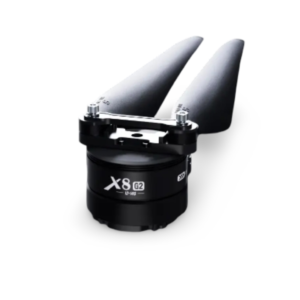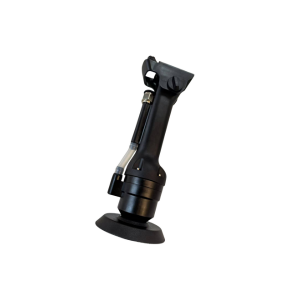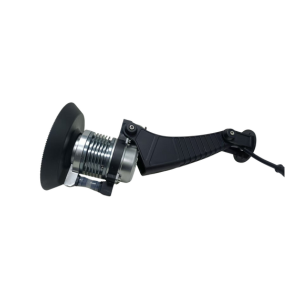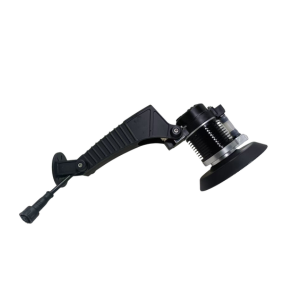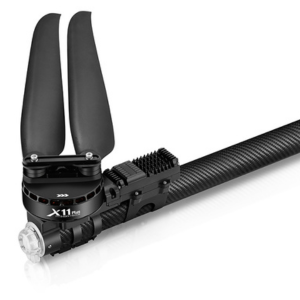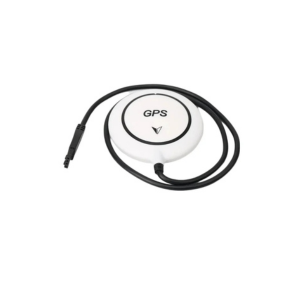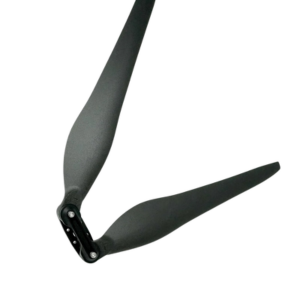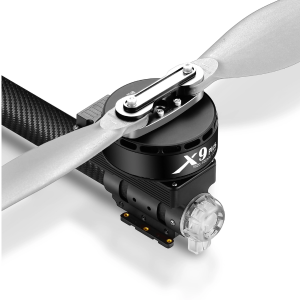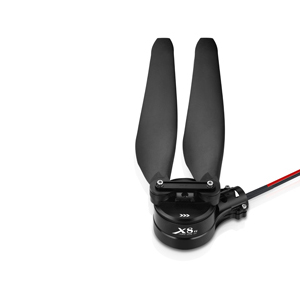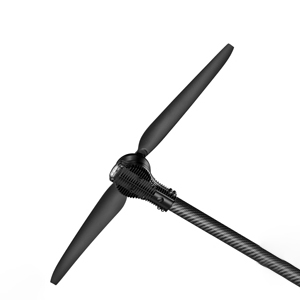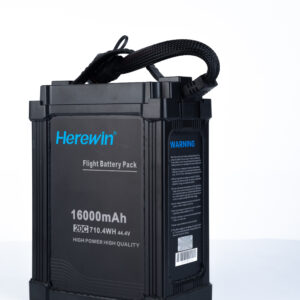


Drone payloads include any item or cargo carried by the UAV apart from the basic flying parts of the drone, including the motors, propellers, framework, battery, and flight control system. These are the structural parts of the drone, without which the UAV cannot fly. However, the purpose of the UAV, as well as its practical usability, lies with the payloads.
For example, without the payloads, the UAV remains just a flying machine. However, when the UAV carries a spray system, it becomes a pesticide sprayer. On the other hand, when the UAV carries a camera, it becomes a crop monitoring system. In other words, the UAV payloads are the main purpose of the UAV, without which the UAV remains just a flying machine. In the case of precision agriculture, the UAV payloads have greatly impacted the way farmers conduct agricultural activities, especially when it comes to handling large-scale agricultural fields.
Drone Payload vs. Maximum Takeoff Weight (MTOW)
One of the most important — and most misunderstood — distinctions in drone engineering is the difference between payload capacity and Maximum Takeoff Weight (MTOW).
MTOW is the total allowable weight of the drone at the moment of takeoff. This includes every component on the aircraft:
-
- Drone frame and arms
-
- Motors, propellers, and ESCs
-
- Flight controller and onboard electronics
-
- The payload itself
Payload capacity, by contrast, is only the additional load the drone can carry beyond its own structural and operational weight.
Formula: Payload Capacity = MTOW − Empty Weight (without payload)
Example: A drone with an MTOW of 25 kg and an empty weight of 15 kg has a usable payload capacity of approximately 10 kg.
| Term | Includes | Example |
| MTOW | Frame + battery + motors + payload | 25 kg |
| Empty Weight | Frame + battery + motors only | 15 kg |
| Payload Capacity | Additional load only | 10 kg |
Exceeding MTOW in agriculture operations carries serious consequences: motor overheating, reduced flight stability, rapid battery depletion, compromised spray accuracy, and in worst-case scenarios, mid-flight system failure over a crop field. Agricultural operators must always calculate payload against real-world MTOW limits — not just manufacturer specifications, which are typically measured under ideal conditions.
Types of Drone Payloads Used in Agriculture
Agricultural drone operations rely on several distinct payload categories, each serving a different stage of the crop management cycle.
1. Liquid Spray Systems — The Core Agriculture Drone Payload
Spray systems are the most widely deployed drone payloads in the agriculture sector. A complete agricultural spray payload consists of four integrated subsystems working in coordination:
- Tank: Generally, the tank volume varies from 5L to 40L depending on the class of the drone. The tank material used must be highly resistant to agricultural chemicals like herbicides, fungicides, and fertilizers. The geometry of the tank also influences the sloshing of the liquid. Tanks with a broader base are more stable during flight.
- Pump: Diaphragm pumps are the best option for agricultural purposes as they pump viscous liquids without clogging. These pumps maintain pressure at any flow rate. The working pressure of the pump lies between 1.5 bar and 3.5 bar. Centrifugal pumps are used when the volume of the liquid is high, but they are more sensitive to the viscosity of the liquid.
- Nozzle Assembly: Flat fan nozzles are used as they provide a wide, uniform spray pattern. Rotary atomizer nozzles are used when a higher degree of control over droplet size is required, reducing the amount of drift when flying in the wind. The droplet size must be of the right microns. If the droplets are too small, there is more drift, while if they are too large, the amount of foliar uptake decreases. Most agricultural drones aim at a droplet size of 100-300 microns depending
- Flow Control System: GPS-linked variable-rate controllers automatically adjust spray output based on drone speed and field position. When the drone slows at field edges or turns, the flow rate decreases proportionally to maintain consistent application rates per hectare. This precision is what distinguishes drone spraying from traditional broadcast methods.
2. Multispectral and Hyperspectral Cameras
The second most important category of drone payloads for modern agriculture is multispectral cameras. Unlike normal RGB cameras, which can only capture visible light, multispectral cameras can capture data on various wavelength bands, including the invisible range of the electromagnetic spectrum, which is directly related to plant health.
This data can be processed to derive various types of indices, the most common of which is the NDVI (Normalized Difference Vegetation Index). This index ranges between -1 and +1. Dense and healthy crops tend to have a higher index, while unhealthy crops and soil tend to have a lower index. Using this data, the farmer can:
-
- Identify problem areas of the crops and target them for improvement
-
- Identify disease and pest damage to the crops before it becomes visible
-
- Plan the schedule for irrigation of crops based on actual water stress
-
- Measure the effectiveness of fertilizer application
Hyperspectral cameras can capture data on a wider range of the electromagnetic spectrum than multispectral cameras and can even identify the presence of certain chemicals in crops.
3. RGB Cameras for Mapping and Photogrammetry
High-resolution RGB cameras mounted on agricultural drones generate detailed aerial imagery used for field mapping, crop stand assessment, and photogrammetric 3D modelling. Modern agricultural RGB payloads use CMOS sensors with high dynamic range and low power consumption.
When combined with photogrammetry software such as DroneDeploy or Pix4Dfields, RGB imagery can produce:
-
- Orthomosaic maps for accurate field area measurement
-
- Digital Elevation Models (DEMs) for drainage and irrigation planning
-
- Plant population counts and row uniformity analysis
These outputs directly inform planting decisions, input purchasing, and equipment calibration for the following season.
4. Thermal and Infrared Sensors
Thermal payloads detect temperature differences across a field rather than visible light. In agriculture, this capability is used to:
-
- Identify irrigation system leaks or blockages (dry areas appear warmer)
-
- Detect crop water stress through canopy temperature mapping
-
- Locate areas of excessive moisture that may lead to fungal disease
Thermal sensors are particularly valuable when combined with multispectral data, as the two datasets together provide a more complete picture of crop health than either alone.
5. LiDAR Sensors
LiDAR payloads emit laser pulses and measure the return time to construct high-precision 3D point cloud models. In agriculture, LiDAR is primarily used for:
-
- Terrain mapping and slope analysis for precision irrigation design
-
- Orchard and vineyard canopy volume measurement
-
- Field boundary mapping with centimeter-level accuracy
Unlike photogrammetry, LiDAR can penetrate partial vegetation cover and perform accurately in low-light conditions, making it effective for applications where cameras would struggle.
The Dynamic Payload Problem — Why Agriculture Drones Are Uniquely Demanding
Of all drone payloads applications — inspection, delivery, mapping, surveillance — agricultural spray operations present the most complex engineering challenge. The reason comes down to one factor: the payload is never constant.
A fully loaded 10L spray tank weighs approximately 10 kg at takeoff. Thirty minutes later, that same tank is empty and approaches zero weight. This continuous, real-time reduction in payload mass creates two serious problems that do not exist in any other drone application:
Shifting Center of Gravity (CG)
As the liquid drains out from the tank, the center of gravity also changes. If drainage is not uniform, which is seldom the case, then the center of gravity shifts in the lateral direction or longitudinally during the mission. The flight controller makes adjustments by increasing the thrust in some motors and decreasing it in other motors. This results in additional battery drain.
Liquid Sloshing Effect
The liquid sloshing effect occurs in a partially filled tank where liquid is free to move in response to acceleration, braking, and direction changes. Sharp turns are common while flying along the edges in agricultural missions. In such situations, the liquid inside the tank also makes sudden movements. As a result, the center of gravity also makes sudden movements, and this is beyond the control of a PID flight controller.
How Modern Agriculture Drones Address These Challenges
- Baffle Tanks: Internal partitions divide the tank volume into smaller chambers, physically restricting how far liquid can move during flight maneuvers. This significantly reduces sloshing amplitude without adding substantial weight.
- Symmetrical Dual-Tank Configurations: Many advanced agricultural drones use two smaller tanks mounted symmetrically on opposite arms rather than a single central tank. As both tanks drain at the same rate, the weight reduction remains balanced across the airframe, minimizing lateral CG shift.
- Adaptive Flight Controllers: Next-generation agricultural drone controllers incorporate real-time payload weight monitoring through onboard load sensors. The controller continuously adjusts motor thrust distribution as the tank empties, compensating for CG changes dynamically throughout the spray mission rather than relying on static pre-flight calibration.
This combination of mechanical design and intelligent software is why agricultural drone payloads engineering requires a fundamentally different approach than any other UAV application category.
Payload Capacity by Drone Class
| Drone Class | Weight Range | Payload Capacity | Typical Agriculture Application |
| Micro | 250g – 2kg | 500g – 1.5kg | Multispectral imaging |
| Small | 2kg – 25kg | 5kg – 15kg | Spray systems, thermal cameras |
| Medium | 25kg – 150kg | 15kg – 40kg | Heavy spray tanks, LiDAR |
| Large | 150kg+ | 40kg+ | High-volume bulk spraying |
Note: Real-world usable payload is typically 60–70% of the manufacturer’s stated maximum, accounting for environmental variables, safety margins, and battery reserves.
Key Technical Factors Affecting Agricultural Payload Performance
- Motor Selection: Low-KV motors (100–400 KV range) provide the high torque required for lifting and sustaining heavy agricultural payloads. Efficiency targets of 8–12 grams of thrust per watt are standard for heavy-lift configurations. Always calculate required thrust using: Total thrust ≥ (Drone weight + Payload weight) × 2.
- Battery System: Higher cell count batteries (6S at 22.2V) reduce current draw for the same power output, extending flight time under load. Each additional 100g of payload increases current consumption by approximately 2–5%. Battery performance also degrades in high temperatures — a critical consideration during peak agricultural spray seasons.
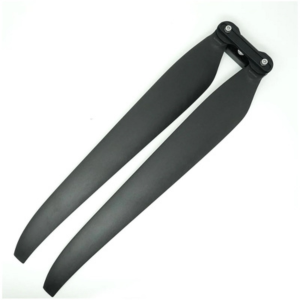
- Propeller Selection: For hover-heavy spray operations, larger-diameter, low-pitch propellers (3–5 inch pitch) generate more lift per watt than high-pitch alternatives. Carbon fiber propellers are preferred over plastic in agricultural applications due to lower vibration output, which protects onboard sensor accuracy.
- Center of Gravity Management: CG must remain within 5mm of the drone’s geometric center for stable autonomous flight. A lateral CG offset forces compensating motors to work harder, increasing power consumption by 10–15% and generating uneven motor wear. For liquid payload systems, this must be re-evaluated dynamically as the tank drains.
- Altitude and Temperature Effects: Air density decreases approximately 12% per 1,000 meters of elevation gain, directly reducing propeller thrust output. On a hot day at 40°C, air density is roughly 5% lower than at 15°C. Agricultural operators in highland or hot-climate regions should reduce payload by 10–15% per 1,000m of altitude gain and compensate with larger propeller diameters or higher motor KV ratings.
Payload Integration and Mounting Systems
Reliable payload integration is as important as the payload hardware itself. In agricultural drone systems, this involves both mechanical and electronic integration:
- Quick-Release Tank Mounts: Allow field operators to swap empty tanks for full ones rapidly between spray runs, maximizing operational throughput per day.
- Communication Protocols: Agricultural payloads are connected to the drone’s flight controller via MAVLink or manufacturer-specific SDKs, enabling real-time flow rate control, pump status monitoring, and GPS-synchronized variable-rate application.
- Custom Mounts: PETG and ABS materials — produced via industrial 3D printing — are commonly used for spray system brackets and sensor housings due to their chemical resistance, UV stability, and superior thermal tolerance compared to standard PLA.
- Vibration Isolation: Rubber dampening mounts between the airframe and sensitive sensors (IMUs, cameras) are essential in spray drone configurations, where pump operation introduces continuous mechanical vibration that can corrupt sensor data if unaddressed.
Operational Best Practices for Agricultural Drone Payloads
-
- Maintain payload weight between 25–40% of MTOW for optimal balance of flight time, stability, and maneuverability
-
- Perform a manual CG balance check before first flight with any new tank, nozzle, or sensor configuration
-
- Pre-calibrate all flow meters, IMUs, and compasses before each spray mission
-
- Increase throttle by 10–15% as the tank approaches empty to maintain consistent altitude and spray height
-
- Reduce planned payload by 10% per 1,000m of elevation gain for highland field operations
-
- Maintain a minimum 20% battery reserve — voltage sag under load during low-battery conditions causes sudden thrust loss
-
- Inspect nozzles and pump filters after every mission — blockages cause uneven application that data maps will not reveal
Regulatory Considerations (India — DGCA)
In India, agricultural drone operations are governed by the Directorate General of Civil Aviation (DGCA). Regulations define drone weight categories, operational altitude limits, and payload restrictions for spray systems. Operators carrying liquid agricultural payloads above specific weight thresholds require appropriate licensing, operator certification, and in some cases, geo-fencing compliance near restricted airspace. Always verify current DGCA guidelines before deploying agricultural drone payload systems commercially.
Future Direction of Agricultural Drone Payloads Technology
The next generation of agricultural drone payloads is moving toward greater intelligence and modularity:
- Smart Payloads with Onboard AI: Integrated processing chips analyze multispectral and RGB data in real time during flight, enabling the drone to autonomously adjust spray rates based on live crop health readings rather than pre-mission maps.
- Modular Payload Bays: Standardized mounting interfaces allow a single drone to switch between spray tanks, multispectral cameras, and LiDAR units between missions — reducing the need for multiple specialized platforms.
- Higher Energy Density Batteries: Advances in solid-state battery technology are projected to increase energy density beyond current LiPo limits, directly enabling heavier payloads and longer operational ranges per charge cycle.
Conclusion
Agricultural drone payloads represent the most technically demanding category in commercial UAV operations. No other application simultaneously combines heavy dynamic payload, corrosive materials, precision GPS-linked delivery, and continuous real-time mass change in a single system.
Selecting the right drone payloads — whether a spray system, multispectral sensor, thermal camera, or LiDAR unit — and integrating it correctly determines the effectiveness, efficiency, and regulatory compliance of every agricultural drone operation. For farmers, agronomists, and drone operators alike, understanding the technical fundamentals of drone payloads system is not optional. It is the foundation of effective precision agriculture.