

Drone radar sensors are fundamentally reshaping how modern agriculture approaches safety — converting standard unmanned aerial vehicles into intelligent, self-aware machines capable of navigating complex farm environments with surgical precision. Across India’s vast and varied agricultural landscape — from sprawling wheat fields in Punjab to terraced rice paddies in Assam and dense mango orchards in Maharashtra — agricultural drones have evolved from novelty tools into mission-critical operational assets. But behind every safe, efficient, and reliable spray mission is a piece of technology that rarely gets the spotlight it deserves: the radar sensor. Small, powerful, and relentlessly accurate, the drone radar sensor is not merely an add-on — it is the backbone of every serious agriculture safety operation running today.
Why Agriculture Safety Operations Demand More Than GPS
For years, agricultural drone operators relied heavily on GPS-guided flight paths and simple ultrasonic distance sensors to navigate fields. In clean, open environments this worked reasonably well. But real agricultural conditions are rarely clean or simple. Fields are bordered by power lines. Orchards are dense with canopy. Irrigation channels cut across flight paths. Seasonal fog, pesticide mist, dust from harvesting equipment, and bright noon sunlight all conspire to confuse camera-based and optical sensors.
This is the environment where drone radar technology proves its superiority. Radar does not care about light, dust, spray mist, or fog. It transmits radio waves, measures their return, and calculates precise object distances in real time — delivering consistent, reliable data that pilots and autonomous flight systems can act on instantly. In agriculture safety, where the margin for error is zero, this consistency is everything.
The specific technology powering modern agricultural drone radars is called FMCW — Frequency Modulated Continuous Wave radar. Unlike older pulsed systems, FMCW radar is simultaneously transmitting and receiving at all times. This gives it exceptional resolution at short ranges, very low power draw, and the ability to measure not just object distance but object velocity — making it ideal for low-altitude, high-speed drone operations over agricultural land.
The Three Pillars of Radar-Driven Agriculture Safety
1. Obstacle Detection and Avoidance — Primary Safety Feature
In agriculture safety operations, drone radar sensor systems play a critical role in detecting obstacles like trees, poles, wires, animals, and workers. With front and rear radar providing near 360-degree awareness and detection ranges up to 25 meters, drones can instantly adjust their path and avoid collisions. This not only protects expensive equipment but also ensures worker safety during operations, especially in back-and-forth spraying patterns.
2. Terrain-Following Radar — Precision Altitude Control
Terrain-following radar allows drones to maintain a constant height above the ground rather than sea level. This is essential for India’s varied landscapes, including slopes, orchards, and uneven fields. With high accuracy (±0.05m) and fast updates, drones can fly smoothly over changing terrain, ensuring safe operation and consistent spray coverage.
3. All-Weather Operational Reliability
Unlike camera-based systems, drone radar sensors perform reliably in fog, dust, low light, and extreme temperatures. With robust protection (IP-rated) and wide temperature tolerance (-20°C to +85°C), radar ensures uninterrupted drone operations in all farming conditions—making it essential for time-sensitive agricultural tasks.
Drone Radar Sensors Offered by Bharat Skytech
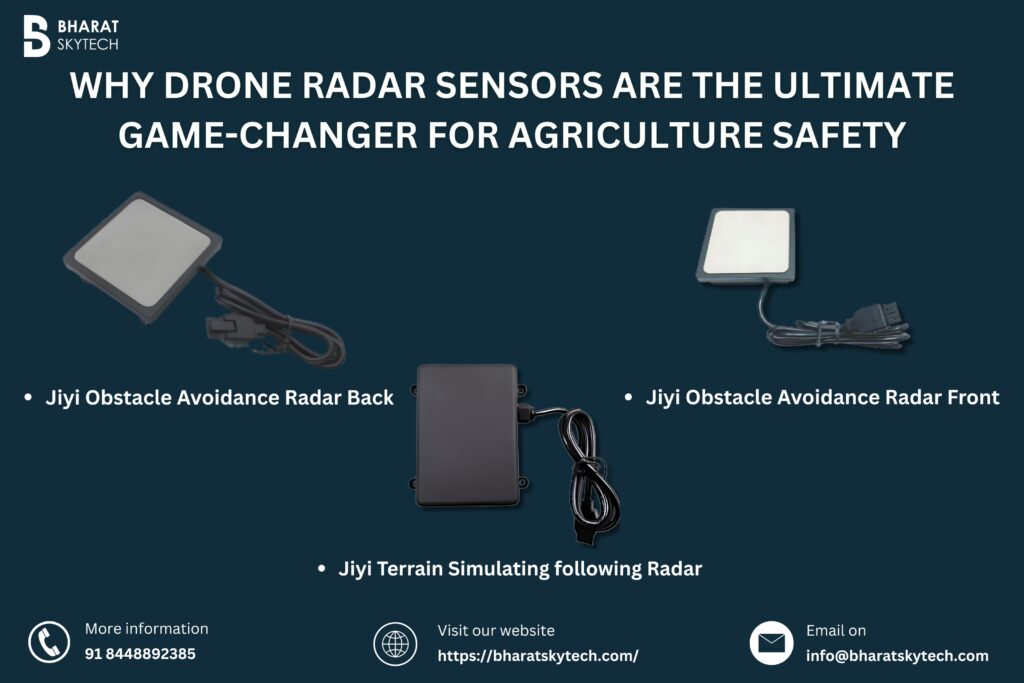
Bharat Skytech is one of India’s foremost suppliers of professional-grade UAV components and agricultural drone technology. For operators seeking a dependable, performance-proven drone radar sensor, Bharat Skytech offers the complete JIYI radar lineup — three purpose-engineered modules covering every critical dimension of agriculture safety.
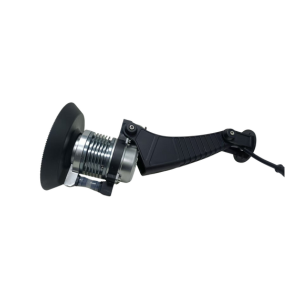
Jiyi Obstacle Avoidance Radar Rear — UAV-R21-B
The UAV-R21-B provides rear-facing obstacle detection, completing the backward situational awareness that every agricultural spray drone requires for safe reversals and multi-directional operations.
Technical Specifications
| Specification | Details |
|---|---|
| Modulation Mode | FMCW |
| Center Frequency | 24.125 GHz |
| Ranging Range | 1 – 25 meters |
| Ranging Accuracy | ±0.1 meter |
| Range Resolution | 0.6 meter |
| Output Frequency | 40 Hz |
| Power Consumption | 3.0W @ 25°C |
| Operating Voltage | 9V – 28V |
| Operating Temperature | -20°C to +85°C |
| Output Interface | CAN |
The wide operating voltage range of 9V to 28V makes this radar compatible with virtually every agricultural drone power system on the market, while the CAN output interface enables straightforward integration with leading flight controllers.
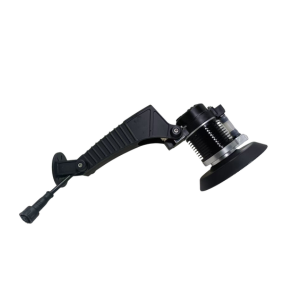
Jiyi Obstacle Avoidance Radar Front — UAV-R21-F
The UAV-R21-F is the forward-facing radar, delivering a broad detection arc that gives agricultural drones early warning of obstacles directly in their path during spray operations.
Technical Specifications
| Specification | Details |
|---|---|
| Model | UAV-R21-F |
| Detection Range | 1 – 25 meters |
| Accuracy | ±0.1 meter |
| Modulation Mode | FMCW |
| Center Frequency | 24.125 GHz |
| Power Consumption | 3.0W @ 25°C |
| Operating Voltage | 5V |
| Interface | UART / TTL |
| Resolution | 0.6 meter |
| Field of View (FOV) | Horizontal 120°, Vertical 30° |
| Working Temperature | -20°C to +60°C |
| Weight | 80g |
| IP Rating | IP67 |
| Dimensions | 12 × 11 × 6 cm |
The 120° horizontal field of view is the standout specification here — it means the UAV-R21-F is not just looking straight ahead but sweeping a wide arc that captures obstacles approaching from oblique angles. The IP67 waterproof rating ensures full protection during chemical spray operations, and the lightweight 80g body has minimal impact on drone payload capacity.
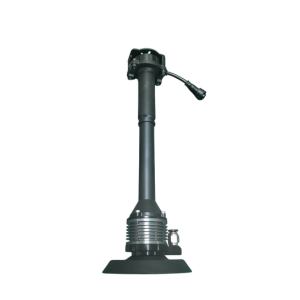
Jiyi Terrain - Following Radar
The terrain following radar is the third and equally essential module in a complete agriculture safety sensor stack — providing the continuous ground-clearance data that keeps drones flying at safe, consistent, and effective altitudes over any terrain.
Technical Specifications
| Specification | Details |
|---|---|
| Weight | < 50g |
| Center Frequency | 24.125 GHz |
| Modulation Mode | FMCW |
| Altimetry Range | 0.3 – 15 meters |
| Altimetry Accuracy | ±0.05 meters |
| Output Frequency | 50 Hz |
| Power Consumption | 1.5W @ 25°C |
| Working Voltage | 6V – 28V |
| Working Temperature | -20°C to +85°C |
| Output Interface | CAN |
Weighing less than 50 grams, this module imposes virtually no payload penalty while delivering a 50Hz update rate — fifty fresh ground-clearance readings per second. This high-frequency feedback loop is what enables smooth, responsive terrain-following even over sharply contoured terrain. The altimetry accuracy of ±0.05 meters — just 5 centimetres — gives flight controllers the fine-grained data they need to maintain precise, safe nozzle height throughout every spray pass.
The Competitive Advantage of FMCW Radar in Agriculture Safety
Across all three JIYI radar modules, the shared foundation is FMCW radar technology — and this choice is deliberate. FMCW delivers several performance advantages over older radar approaches that are particularly valuable in field safety scenarios:
- High short-range resolution — Agricultural drones operate at 1 to 5 meters above crop surfaces. FMCW excels at resolving objects at these close distances with centimetre-level accuracy.
- Simultaneous ranging and velocity measurement — FMCW can detect not just where a moving obstacle is, but how fast it is approaching. This allows smarter, earlier avoidance responses.
- Low power consumption — Agricultural spray missions can run for 20 to 40 minutes per battery cycle. Low-power radar sensors (1.5W to 3.0W) preserve battery capacity for the spray system and flight motors.
- Multi-drone interference resistance — As drone swarm operations become more common on large farms, FMCW’s frequency modulation approach significantly reduces cross-interference between simultaneously operating radar modules.
Conclusion
Drone radar sensor technology is now essential for safe and efficient agriculture drone operations. As farming moves toward larger and more autonomous drones, relying only on manual control or GPS is no longer enough.
With front, rear, and terrain-following radar, drones gain accurate obstacle detection, stable altitude control, and reliable performance across all terrains.
Bharat Skytech provides advanced JIYI radar solutions along with a complete range of agricultural drone components, making it a one-stop solution for building and upgrading professional drone systems.
Adopting drone radar sensors is no longer optional—it is the foundation of safe, smart, and future-ready farming.